

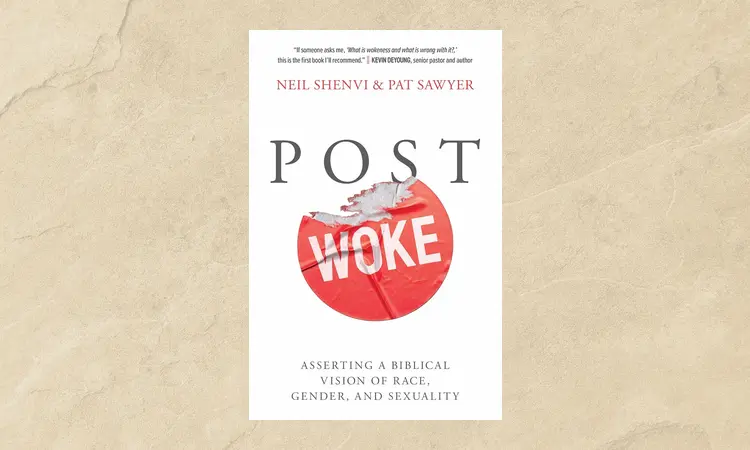
In the last two decades, America radically reimagined its moral assumptions. To see how far the ground has shifted, one need only remember that Obama and the state of California both publicly opposed gay marriage as recently as 2008. That’s an astounding fact. Today, arguments about systemic racism, DEI initiatives, and the ever-expanding LGBTQ movement take up most of the oxygen in the ongoing culture wars. But is wokeness just a fever dream soon to be vanquished by Trump executive action? In Post Woke, coauthors Neil Shenvi and Pat Sawyer argue that while the political wind may have shifted, the underlying worldview behind wokeness hasn’t changed; so we shouldn’t expect it to fade away anytime soon.
Post Woke isn’t the first book responding to Critical Theory—nor the first one reviewed in this column—but it benefits from mature thinking and retrospection that some of those early hot takes lacked. (For a more scholarly deep dive into Critical Theory, Shenvi and Sawyer also wrote a longer book titled Critical Dilemmas.) When we merely criticize bad ideas, we fail to win the day. Instead, “we should also offer positive alternatives rooted in Scripture” (105). In this book the authors focus less on theory and more on developing a Biblical response.
Shenvi and Sawyer argue that Critical Theory and Christianity represent mutually incompatible worldviews, but that doesn’t mean we disagree on every detail. The book does a good job of acknowledging common ground where possible. We ought to condemn racism, oppression, and abusive power dynamics—not as concessions to wokeness, but because the Bible condemned them first. At the same time, we must carefully define those terms. As Shenvi and Sawyer point out, “Not all norms are oppressive. Not all categories are socially constructed. Justice does not require us to abolish all hierarches” (124).
Helpfully, the book ends with a chapter on how to engage with different people around us: our children, neighbors, employers, and fellow Christians. For example, while they strongly discourage using someone’s preferred pronouns, they also give strategic advice to navigate that scenario without causing undue offense. How we discuss these issues with our children or church family should look different from conversations with our neighbors because the stakes are different and we’re starting from different shared assumptions. And while Biblical truth doesn’t change, the way we present that truth will look different based on the situation. Nevertheless, “to the extent that we actually love our neighbors, we will risk offending them by telling them the truth” (200).
The authors exemplify the right combination of clarity and charity, neither resorting to strawman arguments nor softening unpopular truths. Post Woke offers a clear response to wokeness while avoiding the pitfalls of hysteria or compromise.