

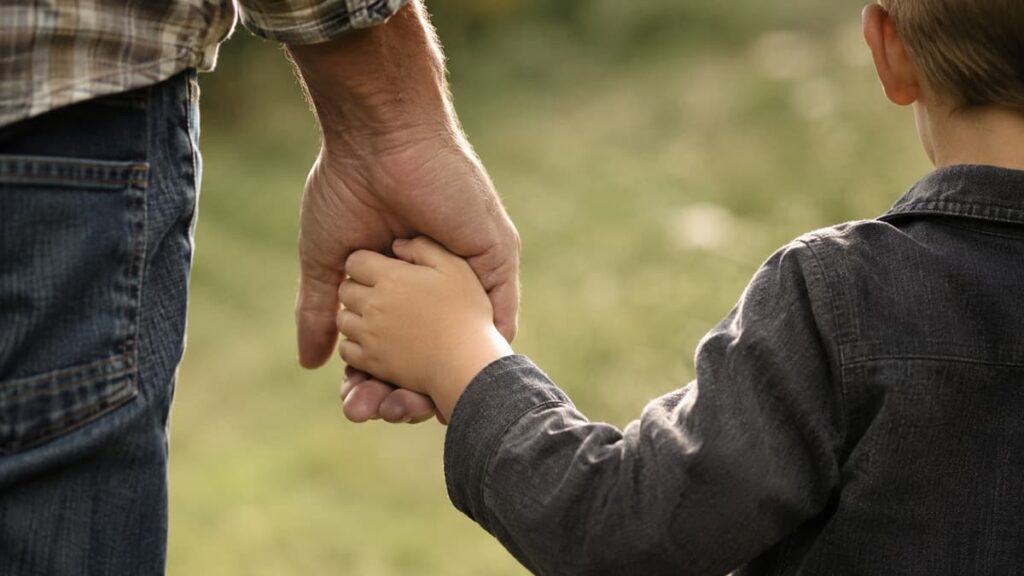
Why adopt? Why the topic of adoption? Why would we care for orphaned and vulnerable children by bringing them into our families? Why would we immerse ourselves in hard and broken places? Because that’s what Christ has done for us.
Adoption is having full membership in a family that one was not born into biologically. Is that a spiritual family, a physical family, or both? Adoption in the physical sense is a noun that is defined as the ‘act of adopting, or the state of being adopted; the taking and treating of a stranger as one’s own child.’[^1] In the spiritual sense, adoption is defined as ‘God’s taking the sinful children of men into His family as sons and daughters’ or ‘the act where God brings believing sinners into His divine family.’[^2] Therefore, adoption in Christianity holds a dual meaning, serving both as a foundational doctrine regarding a believer’s relationship with God and as a practical call to care for orphans. The simple and profound truth is that we have been grafted into His family and are called His sons and daughters through the gift of adoption. That truth is the why behind the what of Christian adoption and orphan care.
Adoption is God’s Plan A. It is not a second-rate idea or a divine afterthought. God planned for adoption from before the beginning of time because He knew Adam and Eve would sin, and mankind would need to be redeemed. He did this by sending His own Son, Jesus, who was born to a virgin mother. Jesus grew to be a man and made a way for all of us to come into His family through His own life, death, and resurrection. The Son of God became the Son of Man so that we can become the adopted sons and daughters of God! In Ephesians, we understand that adoption is Plan A because He has chosen us in Him “before the foundation of the world.” (ESV) He saw our brokenness and embraced us in our weakness, adopted us into His family, and changed the course of our lives forever. Paul speaks of adoption in four separate passages (Eph. 1:4-6, Rom. 9:4, Gal. 4:4-6, Rom. 8:15, 22-23). God chose the Israelites in the Old Testament to be His chosen people. As New Testament believers, we are His children through the gift of adoption.
Earthly adoption, then, is a metaphor of our spiritual adoption into God’s family. First, adoption changes the legal status of the child. Just like adoptees are legally the sons and daughters of their new family, so we are now sons and daughters of God! The second metaphor coincides with the first. Adoption means a name change. The surname is changed and, in some situations, the first name as well. Even the child’s birth certificate is completely amended to look exactly like the child was born biologically to their adoptive parents. In Christ, we have a new name and identity. Third, adoption in both cases is seriously planned. Parents must fill out forms, attend training courses, and participate in the process. According to Eph. 1:4-6, our heavenly Father planned our adoption before the beginning of time (see previous paragraph). Fourth, adoption is costly. For earthly parents, the investment of time, money, and resources can add up quickly, but it is worth the cost. Similarly, we know that our adoption into God’s family came at a significant cost – the price of Jesus’ life! He gave everything for us so that we might be included in His family! Fifthly, adoption is often from less-than-ideal circumstances. Children from hard places experience neglect, abuse, and a host of other difficulties, but neither did God find us adorably wrapped in a cozy blanket and irresistibly cute. Instead, He found us when we were ugly, evil, and rebellious. We were not attractive. In fact, we were slaves in sin. All of God’s adoptions cross a much greater moral and cultural divide than any of our physical adoptions ever will. Lastly, adoption brought us and our children the rights of being heirs of the Father. We have the amazing privilege of receiving our Father’s eternal inheritance! “So you are no longer a slave, but a son, and if a son, then an heir through God” (Gal. 4:7). To summarize the metaphor, in both earthly and spiritual adoptions, the children receive a new name and identity, a change in legal status, personal access to their father/Father, the title as heirs of the family, and an inheritance. Also, the parents must prepare beforehand, sacrifice immensely, and love unconditionally. Adoption breaks the past cycles of brokenness, secures a new present reality, and alters our eternal future. In all these ways and many more, physical adoptions reflect our spiritual adoptions.
Since we have been adopted into God’s family as His sons and daughters, we too should choose children and adopt them into our families. We love others because we have first been loved by God. “See what kind of love the Father has given to us, that we should be called children of God” (I Jn. 3:1a). We care because we have been cared for by our heavenly Father. We adopt because we have been eternally adopted by God our Father.
Scripture places high value on caring for the fatherless and widows. Throughout the Old Testament, “orphans” and “the fatherless” are mentioned forty-one times. In the New Testament, Jesus says, “Truly, I say to you, as you did it to one of the least of these my brothers, you did it to me” (Matt. 25:40). The vulnerable, broken, and social misfits are the exact people that Jesus moves towards with compassion, love, and healing. Jesus calls us to follow His example; in the same way, we should extend care for those who are hurting, alone, and rejected.
Children need more than food, clothing, and shelter. While food and clothes may provide for them physically, what they really need is a family! From the beginning, God established the family unit as the environment for children to grow, thrive, and learn. Orphanages and state departments are man’s solution for caring for the orphans, but the family is God’s solution. He never intended for the growth and nurturing of childhood to happen in an institution. Godly homes offer safe havens for children’s healthy development. Children have physical, emotional, and spiritual needs that He called mothers and fathers to provide through compassion, support, and gospel-centered care within the context of family. The ultimate purpose of adoption by Christians, therefore, is not just to give orphans parents, but to place them in a Christian family that they might be positioned to receive the gospel. Within that family, the world will witness a representation of God’s redemption in loving the helpless, the hopeless, and the despised.
There’s a saying within the adoption and orphan care movement: “Adoption is not for everyone, but caring for orphans is for everyone.” If Christians are not responsible to extend compassion to the needy, who is? We, of all people, have experienced what it’s like to be pursued while in our brokenness and brought into a family – His family. The truth is some of us are called to welcome orphans into our home through foster care or adoption, but we are all called to reach the brokenhearted and move towards them with love. In our various communities, we will have opportunities to love like Jesus loved. That may mean providing daycare for the single mom who lives next door, volunteering at the local kids’ club, making a meal for a poor family, or providing transportation to a doctor’s appointment. These acts of service impact lives and make an eternal difference by caring for physical needs while pointing each one to the Father who brings true redemption.
In conclusion, an earthly adoption is a beautiful picture of our spiritual adoption into God’s family. As we reflect on His love, care, and compassion towards us, may we also extend love, care, and compassion towards the ‘least of these’ in our society. We adopt and care for the orphan because God adopted us in Christ when we were without hope and a home. Biblically, adoption is not primarily something we do in order to meet a great need. Instead, adoption is a tangible demonstration and picture of the gospel – of God’s adoption of us – which is put on display for the world to see and give glory to God!
Author: Aaron and Jenni Riegsecker reside in Goshen, Indiana. As foster parents for twelve years, they cared for numerous children in their home. Currently, they are blessed to be the adoptive parents to six beautiful children ages 10-20. Their personal journey with adoption has led them to a much deeper understanding of and gratefulness for their spiritual adoption into God’s family.
Bibliography
The Holy Bible. English Standard Version, Crossway, 2001.
Webster’s Dictionary 1828 https://webstersdictionary1828.com/
Carr, Johnny. Orphan Justice: How to Care for Orphans Beyond Adopting. With Laura Captari, B&H Publishing Group, 2013. FamilyLife Today®
Cruver, Dan, editor. Reclaiming Adoption: Missional Living through the Rediscovery of Abba Father. Cruciform Press, 2011. https://cruciformpress.com
Johnson, Jason. All In Orphan Care: Exploring the Call to Care for Vulnerable Children and Families. Credo House Publishers, 2018. BooksRun
–Everyone Can Do Something: A Field Guide for Strategically Rallying Your Church around the Orphaned and Vulnerable. Credo House Publishers, 2018.
Piper, John. “Adoption: The Heart of the Gospel.” Desiring God, 29 July 2026, https://www.desiringgod.org/messages/adoption-the-heart-of-the-gospel.