

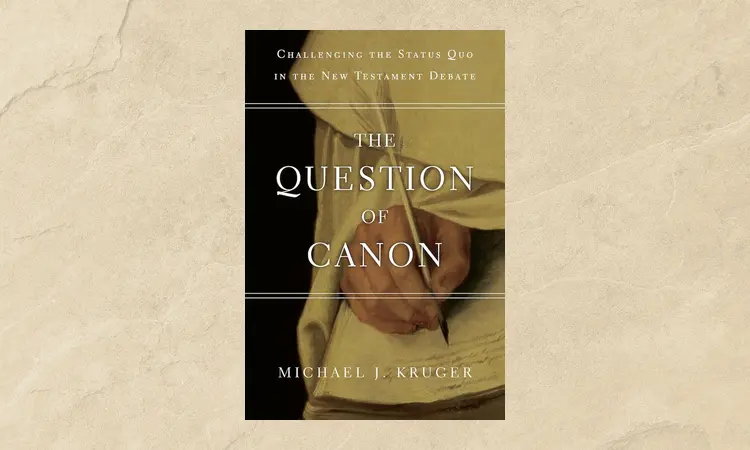
Why is there a New Testament? For most of us, that question has never entered our minds—we take it for granted that the New Testament books were God’s idea. Ask most New Testament scholars, however, and you’ll find a very different conclusion: that the church invented the New Testament canon centuries later in order to stamp out heresies and exert control. According to Michael J. Kruger, the dominant position today holds that “the idea of canon is not a natural and original part of the early Christian faith” (20). His book, The Question of Canon, challenges the assumptions behind that conclusion.
Though Kruger believes the Bible is God’s word, this book isn’t an apologetic work defending inerrancy or trying to prove dates and authorship. Instead, he sticks to a much more limited focus, addressing five key tenets of the status quo position. These include the belief that the early church didn’t value written texts, that they didn’t expect any new Scripture, that the New Testament authors were unaware of their authority, and that the books weren’t considered Scripture until centuries later when the church established the canon.
Kruger writes like a scholar (see the forty page bibliography in the back!), but there’s something sturdy about his understated arguments and meticulous notes as he carefully dismantles each assumption. For instance: even though literacy was low, the early Christians were “bookish” from the beginning because they inherited the Old Testament Scriptures from Judaism (118). And that collection, “with its truncated and forward-looking ending,” leads the reader to expect “a second installment of writings to finish the job” (52). But beyond that, Kruger marshals countless examples showing that the apostles knew they wrote with Christ’s authority and the early Christians understood it that way. The early church didn’t have the edges of the canon so clearly defined, but Kruger demonstrates that the canon was a seed “present in the soil of the church from the very beginning” (203).
It’s fair to ask: does it matter what the scholars think? Certainly, we shouldn’t hang our faith on the current academic consensus, but those ideas tend to filter down to the popular level of social media, books, and podcasts sooner or later. And while we don’t need the answer to every objection in order to trust the Bible, if it really is true, it must stand up to scrutiny. Scholars like Kruger remind us that truth doesn’t need to fear questions. This book isn’t for everyone, but for someone wrestling with doubt about the Bible or struggling to answer a skeptical friend, Kruger’s book is daylight and fresh air.